Top 10 Alternatives to Google Ads for Small Businesses
When we started advising small businesses years ago, Google Ads was the go-to for paid search. Today’s paid marketing landscape is richer and more varied, and that’s great news for my small business clients. If we had to pick one truth: relying on a single ad channel limits reach and increases risk. So we built a toolkit of PPC alternatives that we recommend again and again.
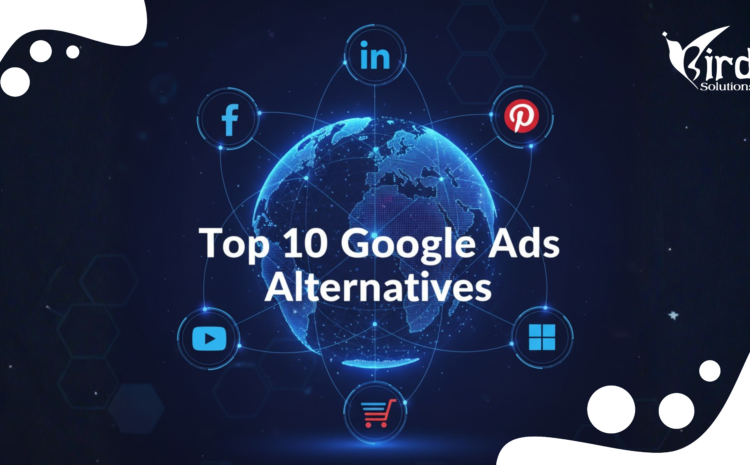
Below, we’ll walk you through the top 10 alternatives to Google Ads, explain when we use each platform, typical budgets, pros and cons, and how we can combine them with SEO, content, and email marketing to generate measurable ROI.
Why we look beyond Google Ads
Google Ads is powerful, but it’s not always the most cost-effective or strategically right platform for every campaign. We often encounter businesses that need:
- Lower CPCs and tighter audience targeting
- Better brand storytelling (video/visual-first formats)
- B2B lead generation (targeting by role/company)
- Sales on marketplaces or visual discovery platforms
So we diversify. Here are the platforms and approaches we use most.
1. Microsoft Advertising (Bing Ads) Search with lower CPCs
Why we use it: Microsoft Advertising often costs less per click than Google and reaches users who still use Bing or Yahoo. For small businesses targeting desktop users and older demographics, it’s an immediate lift.
Use case: Local services, B2B, and niche product searches.
Budget: Start with ₹10,000–₹25,000/month and scale.
Pro tip: Import Google campaigns and tweak bidding and negative keywords; conversions can be surprisingly strong.
2. Meta Ads (Facebook & Instagram) Social + Intent hybrid
Why we use it: Meta’s ad system excels at interest and behavior targeting, creative testing, and driving lower-funnel conversions with retargeting. Instagram Reels and Facebook video ads are essential for brand and direct sales.
Use case: eCommerce, local businesses, lead magnets, event signups.
Budget: ₹15,000–₹50,000/month for meaningful testing.
Pro tip: Use catalog ads and dynamic retargeting for Shopify/WordPress stores and combine with lookalike audiences.
3. YouTube Ads: Video-first discovery and tutorials
Why we use it: YouTube is the search engine for video. If my product benefits from demos, tutorials, or long-form storytelling, YouTube builds trust and SEO value.
Use case: SaaS demos, how-to content, product walkthroughs.
Budget: ₹20,000+/month depending on CPM targets.
Pro tip: Layer in remarketing: viewers who watched 50% of a video make excellent retargeting audiences.
4. LinkedIn Ads: B2B targeting & lead generation
Why we use it: For B2B services, LinkedIn lets me target by job title, company size, and industry, something search engines can’t do as precisely. Sponsored Content and InMail deliver high-quality leads.
Use case: B2B services, recruitment, enterprise software.
Budget: ₹30,000+/month (bids are higher, but lead quality is better).
Pro tip: Use LinkedIn Insight Tag to track conversions and export leads to your CRM for nurture sequences.
5. Amazon Ads: Marketplace sales engine
Why we use it: If we sell physical products, Amazon Ads reaches high-purchase-intent shoppers right where they buy. Sponsored Products and Sponsored Brands are essential.
Use case: Consumer goods, FMCG, electronics, brands with listing presence.
Budget: Varies by category; start small and measure ACOS.
Pro tip: Optimize product listings (images, bullets, backend keywords) before scaling ad spend.
6. Pinterest Ads: Visual discovery & inspiration-driven shopping
Why we use it: Pinterest drives discovery for home decor, fashion, food, and lifestyle brands. The audience is in discovery/shop mode, which often means lower CAC for visual products.
Use case: Retail, D2C, design, and lifestyle brands.
Budget: ₹10,000+/month for testing creatives.
Pro tip: Use rich Pins and product catalogs to make your Pins shoppable directly.
7. Quora Ads & Reddit Ads: Niche intent and community intent
Why we use them: Quora targets people asking questions, ideal for educational products or lead magnet offers. Reddit reaches passionate niche communities; use it carefully with community awareness.
Use case: B2B knowledge products (Quora), niche consumer products (Reddit).
Budget: Low testing budgets (₹5,000–₹15,000) can validate ideas.
Pro tip: Craft native, value-first ad copy; community tone matters on Reddit.
8. Native & Content Networks (Taboola, Outbrain): Top-of-funnel scale
Why we use them: Native networks push content across publisher sites and are great for awareness campaigns, driving blog traffic and leads at scale. They pair well with content marketing and SEO.
Use case: Lead magnets, content promotion, brand awareness.
Budget: ₹20,000+/month for measurable scale.
Pro tip: Use strong headlines and HTTPS landing pages; native traffic needs clear next steps to convert.
9. Programmatic Display / DSPs: Precise audience buying at scale
Why we use it: Programmatic platforms give us granular audience targeting and frequency control across the open web, ideal for brands wanting full-funnel programmatic campaigns.
Use case: Brand campaigns, retargeting at scale.
Budget: Higher entry point; typically ₹50,000+ for effective testing.
Pro tip: Use first- and third-party data segments, and optimize towards viewable CPM and view-through conversions.
10. Email, WhatsApp & Influencer Marketing: Owned channels and social proof
Why we use them: These aren’t “ad platforms” in the traditional sense, but they’re among the best low-cost, high-ROI channels we use to convert warm audiences. Email and WhatsApp bring repeat purchases; influencer marketing builds trust quickly for product launches.
Use case: Cart recovery, repeat sales, low-cost lead nurturing.
Budget: Email/WhatsApp are low-cost; influencer fees vary widely.
Pro tip: Combine paid acquisition with email/WhatsApp flows: ad → lead magnet → email drip → sales. Use micro-influencers for targeted, cost-effective campaigns.
How we choose the right alternative: a simple framework
When we evaluate a platform for a client, we ask four questions:
- Who is our audience and where do they spend time? (B2B = LinkedIn; discovery shopping = Pinterest)
- What content format works best? (Video = YouTube; visual = Instagram/Pinterest)
- What’s our conversion path and budget? (Low budget → organic + email; higher budget → LinkedIn or Programmatic)
- How does this fit our owned channels? (Does it feed email lists, remarketing pools, and SEO content?)
Measurement, attribution, and lowering risk
Diversification requires tight measurement. We always:
- Install platform pixels and a server-side tracking fallback where possible.
- Use UTMs and consistent naming conventions to attribute traffic.
- Model multi-touch attribution in analytics for better budgeting.
- Run small experiments (A/B creative & audiences) then scale winners.
Practical budget allocation we use (starter model)
For small businesses testing alternatives, our starter allocation looks like:
- 40% – Social (Meta Ads / Instagram)
- 20% – Search alternative (Microsoft Advertising)
- 15% – Video or content (YouTube / Pinterest)
- 15% – Email/WhatsApp & remarketing (owned channels)
- 10% – Experimentation (LinkedIn, Quora, Native)
Adjust after 6–8 weeks based on CPA and LTV.
Integrating alternatives with SEO & content
Paid channels amplify content and SEO. We always:
- Use paid traffic to test headlines and content that later become SEO assets.
- Push high-performing paid creatives into organic social calendars.
- Repurpose video content across YouTube and short-form channels to improve discoverability.
- Feed paid leads into email sequences to improve conversion rates and LTV.
Final thoughts: diversify, measure, optimize
If we had to sum up: Google Ads is excellent, but it shouldn’t be your only growth engine. The alternatives above give us flexibility, better cost control in certain niches, and creative ways to tell our brand story. As a small business, we buy fewer assumptions and run more small tests, then scale what works.
At iBird Solutions, we design multi-channel paid marketing plans that combine the right alternatives, whether that’s Microsoft Advertising for search, Meta for social, YouTube for video, or email & WhatsApp for owned conversions, and link them into SEO, website development, and analytics. Hence, our paid spend actually grows the business.
If you want, we can audit your current paid setup and recommend a 90-day growth plan with cost estimates and expected KPIs.
By iBird Solutions – 13+ years of digital marketing experience